
GloryBee is an industry leader in developing the conventional non-GMO honey supply chain. We worked closely with the Project over 4 years, and our efforts contributed to the certification standards for honey as they are today.
There are many reasons why Non-GMO Project Verified honey should be a part of your ingredient supply chain all of which add up to bringing added value to your better-for-you brand.
- Non-GMO Project Verified honey meets the functional requirements to support Non-GMO Project Verified labeling and supports the entire Non-GMO agricultural system.
- Honey bees pollinate one-third of every bite of food we eat – to increase the demand for non-GMO agriculture, we need honey bees to pollinate these crops.
- Consumers are increasingly choosing products that are better for them and better for the planet.
How Non-GMO Project Honey is Verified
Standards have been put in place to ensure beekeeping practices follow strict non-GMO standards which include:
Confirmation that crops the bees pollinate are non-GMO crops.
Tracking hive locations and updating these locations annually to ensure no new presence of GMO crops is within the flight range of the bees.
Verifying that any supplemental feed given to the bees is only from non-GMO verified sources.
Most importantly, partnering with beekeepers around the world who are 100% invested in non-GMO practices.
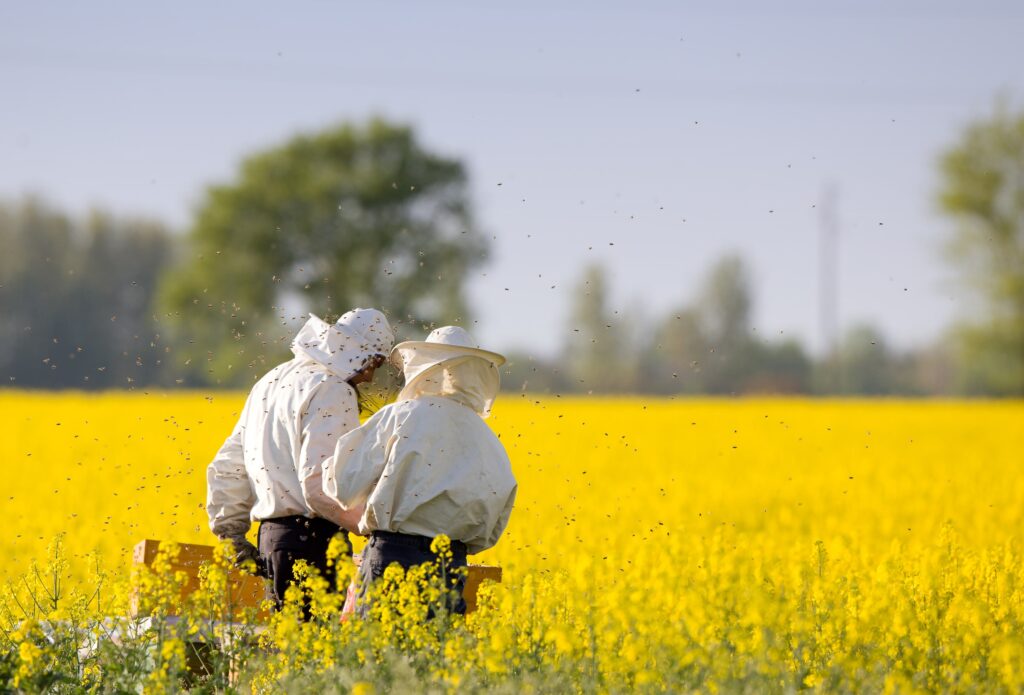
How Beekeeping Has Shifted From Honey Production to Pollination Services in the U.S.
For generations, beekeeping in the United States was synonymous with honey production. Beekeepers made a living primarily by harvesting and selling honey, a valuable natural sweetener that found its way into homes and businesses across the country. However, in recent decades, the focus of the U.S. beekeeping industry has shifted dramatically. Today, pollination services—not honey—are now the primary source of income for many commercial beekeepers.
The Rise of Pollination Services
Honey used to be the bread and butter for beekeepers, but that all started to shift in the early 2000s. What caused the change? A massive surge in demand for pollination, particularly from California’s booming almond industry.
According to the USDA’s Economic Research Service, pollination services now bring in more income than honey sales for U.S. beekeepers and almonds are a big reason why. California produces over 80% of the world’s almonds, and every year, almond growers need two-thirds of the nation’s commercial honeybee colonies to get the job done.
Beekeepers on the Move
Most commercial beekeepers today are migratory. They travel with their hives to follow the bloom seasons across the country. It often starts in California for almond pollination in February, then moves to Washington for apples, the Midwest for clover and sunflowers, and sometimes up to Maine for blueberries.
The USDA outlines these migratory routes as critical to U.S. agriculture. It’s not just almonds—crops like apples, cherries, cranberries, and melons also rely on traveling bee colonies.
Why This Partnership Matters
Why the Big Shift?
So why did pollination services take over honey production? A few key reasons:
- Better Pay: Pollination contracts, especially for almonds, offer more stable and higher income than honey alone.
- Imported Honey Competition: Imported honey has flooded the market, making it harder for domestic honey producers to compete on price.
- Farming’s Growing Dependence: Modern farming relies heavily on managed honeybee colonies for crop pollination.
- Environmental Challenges: Factors like drought, habitat loss, and unpredictable weather have made honey yields less reliable year to year.
The Life of a Modern Beekeeper
Beekeepers today wear many hats. They’re logistics experts, moving hives thousands of miles across the country each year to meet seasonal bloom cycles. Planning these routes requires precision and knowledge of regional climates, crop schedules, and regulatory requirements.
They’re also colony managers, constantly battling threats like Varroa mites and pesticide exposure during crop pollination. This means that managing hive health has become more labor-intensive and costly, with an increased focus on nutrition and veterinary care for bee colonies.
In addition, modern beekeepers must juggle business relationships with growers, negotiate contracts, and ensure their hives meet performance expectations. Many also diversify income streams by still producing and marketing specialty honey or selling beeswax and other hive products.