
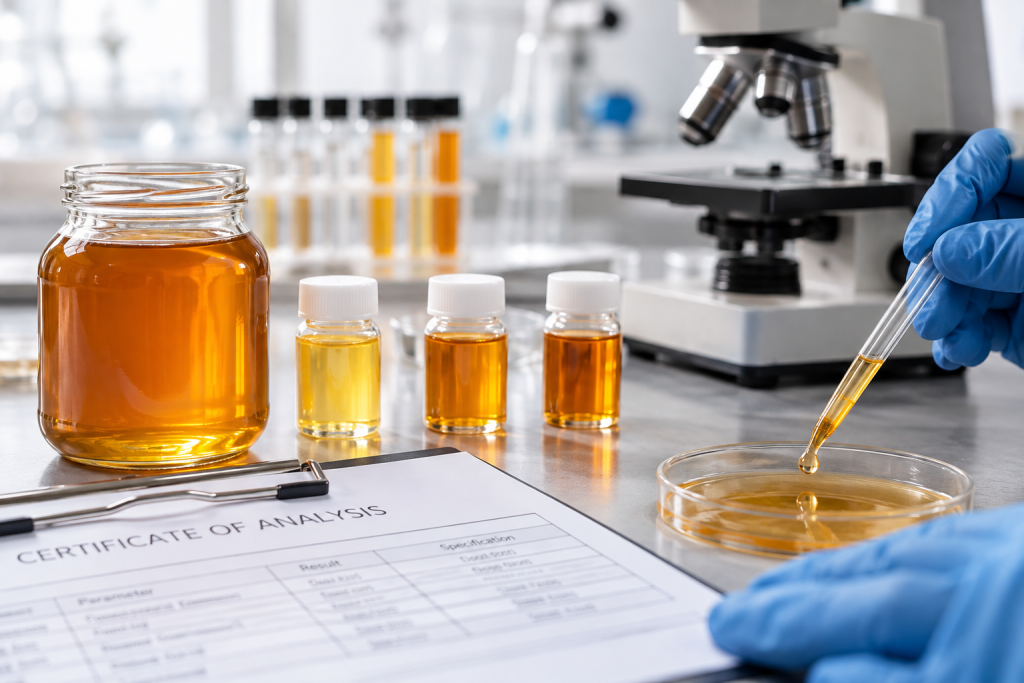
When purchasing honey for commercial food production or foodservice operations, quality and consistency are essential. Buyers need confidence that the honey they receive meets their ingredient specifications and can be used reliably across recipes and production batches.
While factors such as color, flavor, and appearance can help evaluate honey, they cannot tell the whole story. Laboratory testing provides additional information about honey’s composition, quality, and potential contaminants.
Understanding what honey lab testing can reveal, and how to interpret the results, can help businesses make more informed sourcing decisions.
Why Laboratory Testing Matters for Honey Buyers
Honey is a natural ingredient, which means its characteristics can vary depending on floral source, geographic origin, and handling conditions.
For restaurants, bakeries, and food manufacturers, these variations can affect recipe consistency and ingredient performance. Laboratory testing helps buyers evaluate whether honey meets defined specifications rather than relying on appearance or supplier descriptions alone.
Testing can also support supplier verification by providing documented results for specific quality and safety parameters. However, no single honey test can confirm every aspect of quality, purity, or authenticity. A reliable verification process considers multiple results alongside supplier documentation and honey supply chain transparency.
What Does a Honey Testing Laboratory Evaluate?
The tests performed depend on the buyer’s requirements, the honey’s intended use, and applicable food safety standards.
Common areas of honey quality testing include:
- Moisture content: Evaluates water levels that can influence honey stability and susceptibility to fermentation.
- Sugar composition: Measures sugars such as fructose, glucose, and sucrose to help assess composition.
- HMF levels: Measures hydroxymethylfurfural, a compound associated with heat exposure and prolonged storage.
- Authenticity indicators: Uses appropriate analytical methods to investigate possible adulteration with added sweeteners.
- Pollen analysis: Examines pollen present in honey to provide information that may support an assessment of its botanical or geographic origin. Learn more about how pollen analysis helps verify honey origins.
- Residue testing: Screens for specified pesticide residues, veterinary drug residues, or other contaminants.
Each test answers a different question. Buyers should work with suppliers to determine which analyses are relevant to their products and purchasing requirements.
Understanding Honey Residue Testing
Honey residue testing is an important part of evaluating potential contaminants that may not be detectable through taste, smell, or appearance.
Depending on the testing program, laboratories may screen for pesticide residues or veterinary drugs, including certain antibiotics associated with beekeeping practices.
The U.S. Food and Drug Administration maintains an import alert addressing honey containing unsafe drug residues. This highlights why appropriate screening and compliance documentation matter when sourcing honey.
A laboratory result must also be interpreted against the applicable regulatory requirements. Detection of a substance does not automatically mean a product violates a limit, since requirements can differ by substance and market.
For commercial buyers, discussing residue testing with suppliers can help clarify what is screened, how frequently testing occurs, and how results are evaluated.
What Is a Honey Certificate of Analysis?
A honey certificate of analysis, often called a COA, is a document reporting the results of specified tests performed on a product or sample.
Depending on the supplier and testing program, a COA may include:
- Product identification and batch or lot information
- Testing dates and laboratory details
- Parameters tested and analytical results
- Applicable specifications or acceptance limits
- An indication of whether the tested sample meets those specifications
For foodservice operators and manufacturers, a COA can help confirm that a particular honey lot meets purchasing requirements before it enters production. However, buyers should remember that a COA only documents the tests performed on the identified sample or lot. It does not automatically verify every possible quality characteristic or contaminant.
How Testing Supports Consistent Foodservice Operations
Laboratory testing becomes especially valuable when businesses purchase honey regularly or use it in standardized recipes.
For example, a restaurant preparing honey-based sauces and dressings may need consistent ingredient characteristics across deliveries. Bakeries, catering operations, and commercial kitchens using honey in large batches can also benefit from clearly defined ingredient specifications.
Reviewing test results alongside product specifications can help purchasing and quality assurance teams identify unexpected changes before they affect production.
When evaluating a supplier, buyers should ask which tests are routinely performed, whether documentation is available for relevant lots, and how out-of-specification results are handled.
Choose Honey With Confidence
Reliable honey sourcing involves more than comparing prices or selecting a preferred flavor. Laboratory testing, clear specifications, and accessible documentation can all support better purchasing decisions.
At Honey Source, we understand the importance of quality and consistency for commercial honey buyers. Explore our honey certifications and quality information to learn more about our approach to sourcing and product standards.
Request a quote to discuss your bulk honey requirements and find an option suited to your business.


Leave a Reply