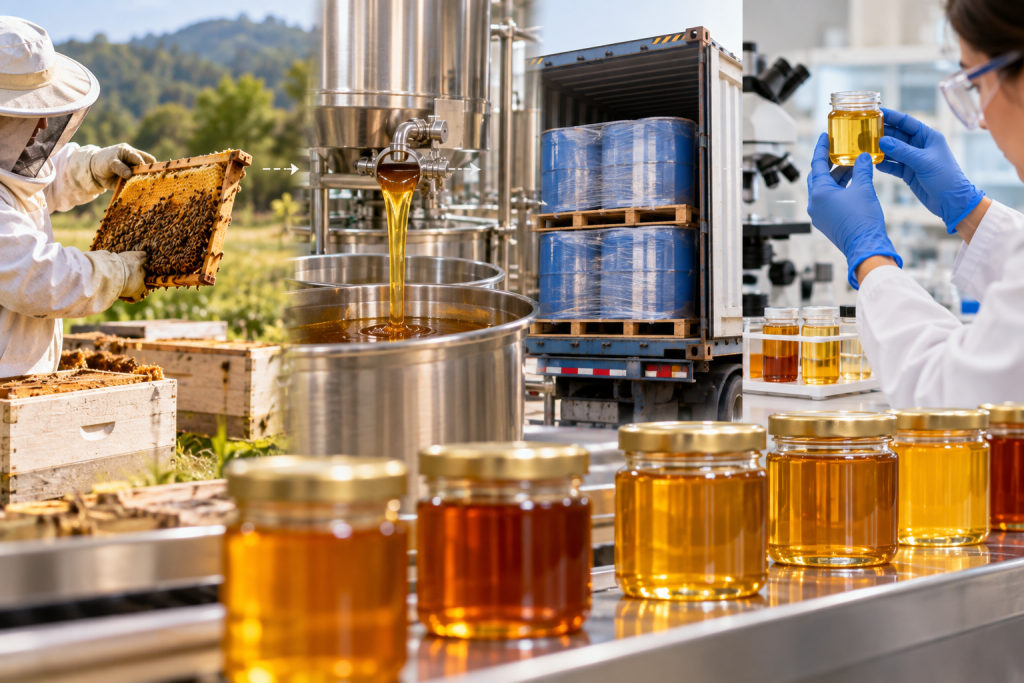
When a private label brand puts honey on the shelf, the supply chain behind that product may stretch far beyond the finished jar, but the brand name customers see on the package is yours. Honey can move from beekeeper to processor, exporter, importer, supplier, and manufacturer before it reaches the consumer.
For private label brands, understanding that journey matters. Greater supply chain transparency can provide more confidence in where honey came from, how it was handled, and whether the product aligns with your sourcing requirements and label claims.
What Does Supply Chain Transparency Mean for Honey?
Supply chain transparency is about having visibility into the steps and organizations involved in moving honey from its source to the finished product.
That can include information about the country or region of origin, suppliers involved, processing and handling, lot identification, testing, certifications, and supporting documentation.
Transparency and traceability are closely connected, but they are not exactly the same. Transparency focuses on visibility and access to information about the supply chain, while traceability provides the ability to follow a product or lot through that chain.
Together, they can give buyers a clearer picture of the ingredient behind their brand.
Why Does Transparency Matter for Private Label Brands?
When your company’s name appears on a honey product, customers may associate the quality and integrity of that product directly with your brand.
A lack of visibility can make it more difficult to evaluate whether honey meets your expectations for origin, authenticity, certifications, and other specifications. It can also create challenges when questions arise about a particular shipment or lot.
For private label buyers, stronger transparency can support more informed sourcing decisions before production begins.
It is especially valuable when a product makes claims related to origin, organic certification, varietal, or other characteristics that depend on knowing more about the honey’s source.
Documentation Helps Connect the Supply Chain
Transparency depends on more than knowing the name of a supplier. Documentation can help connect individual stages of the honey supply chain.
Depending on the product and sourcing program, that information may include purchase and shipping records, lot numbers, certificates, test results, country-of-origin information, and other supplier documentation.
A strong documentation process creates a record that buyers and suppliers can reference when questions arise.
For private label brands evaluating potential suppliers, it is worth asking what records are maintained and how information follows honey as it moves through the supply chain.
Testing Adds Another Layer of Information
Documentation tells part of the sourcing story. Laboratory testing can provide additional information about the honey itself.
Testing methods may be used to evaluate characteristics such as moisture, color, chemical composition, pollen, and potential indicators of adulteration. Different methods answer different questions, which is why testing is generally most useful when considered alongside sourcing records and supplier controls.
For example, pollen analysis can provide clues about botanical and geographic origin, while other analytical methods may help evaluate authenticity.
This combination of testing and supply chain information can provide a more complete picture than either approach on its own.
Third-Party Programs Can Support Verification
Independent certification and verification programs can provide another layer of oversight.
True Source Certified® focuses specifically on honey sourcing and traceability. Programs like this establish requirements that participating companies must meet and provide independent verification of sourcing practices.
Other honey certifications and quality standards may also be important depending on the finished product and the claims a private label brand intends to make.
Certifications do not replace a company’s own supplier evaluation, but they can provide useful additional information when assessing a honey supply.
Questions to Ask Your Honey Supplier
Private label buyers do not need to see every transaction that occurs throughout a global supply chain, but their supplier should be able to answer important questions about the honey they are purchasing.
Ask where the honey originated, how lots are tracked, what testing is performed, which certifications apply, and what documentation is available. If your finished product will make specific sourcing or certification claims, discuss those requirements before production begins.
The goal is to make sure the information available about the honey supports the expectations you have for the product carrying your brand name.
Build Greater Visibility Into Your Honey Supply
Supply chain transparency is not about collecting paperwork for its own sake. It is about having enough reliable information to understand the ingredient entering your product and make informed sourcing decisions.
Honey Source works with commercial buyers to provide honey backed by sourcing expertise, quality controls, documentation, and traceability.
If you’re sourcing honey for a private label product, request a quote to discuss your specifications, certifications, volume requirements, and sourcing needs.



Leave a Reply