
Today’s consumers want to know more about the food they’re eating. Whether they’re shopping at the grocery store or ordering from their favorite restaurant, many are paying closer attention to ingredient lists, food preparation, and where ingredients come from.
This growing interest has helped fuel the clean label trend, encouraging food businesses to rethink the ingredients they use and how they communicate with customers. For restaurants, bakeries, cafés, and other foodservice operations, choosing recognizable ingredients can be one way to respond to these changing preferences. Honey is one ingredient that fits naturally into this conversation, offering familiar sweetness, distinctive flavor, and versatility across a wide range of menu applications.
What Is Clean Label?
Although the phrase appears frequently in food marketing, there isn’t one universally accepted clean label definition. Instead, the term generally describes foods made with recognizable ingredients, straightforward ingredient lists, and transparent sourcing information.
Clean label ingredients are often associated with products that avoid unnecessary additives or use ingredients consumers recognize from their own kitchens. However, clean label doesn’t automatically mean a food is organic, minimally processed, or healthier. For foodservice operators, the concept is about making thoughtful ingredient choices and helping customers understand what’s in their food. This might involve reviewing recipes, simplifying ingredient lists where practical, or providing clearer information about menu items.
Why the Clean Label Trend Matters in Foodservice
The clean label trend isn’t limited to packaged foods. Restaurant customers are also interested in knowing what goes into their meals, especially when choosing sauces, dressings, beverages, and baked goods. According to the 2025 IFIC Food & Health Survey, natural claims are among the food label attributes consumers look for when making purchasing decisions, highlighting the importance of ingredient information.
For restaurants, cafés, and bakeries, being transparent about ingredients can help build customer trust and make menu offerings more appealing. A restaurant that highlights recognizable ingredients in its house-made dressings, for example, gives customers a clearer picture of what they’re ordering.
Clean label food choices can also support menu differentiation. Whether a café promotes freshly prepared beverages or a bakery highlights familiar baking ingredients, thoughtful descriptions can help communicate the care behind a recipe. The goal isn’t necessarily to eliminate every processed ingredient, but to make ingredient decisions that support flavor, consistency, operational needs, and customer expectations.
How Honey Fits Into Clean Label Recipes
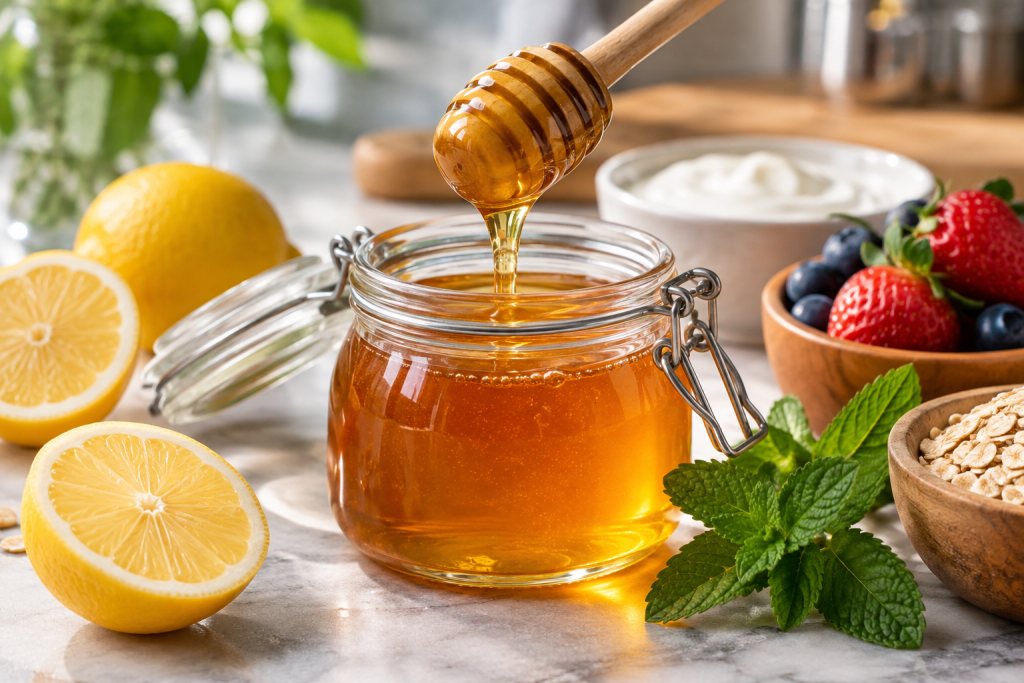
When foodservice operators explore clean label sweeteners, honey is worth considering. Pure honey is produced by honey bees from floral nectar and can be used without additional sweetening ingredients. Its recognizable name makes it easy to communicate on ingredient lists and menus, while its natural sweetness and flavor can complement a variety of recipes.
Honey can be used in salad dressings, barbecue sauces, marinades, glazes, baked goods, and specialty beverages. For example, a restaurant might use honey in a house-made vinaigrette, while a café could incorporate it into a signature tea or lemonade. Bakeries can also experiment with honey in breads, muffins, and other baked goods.
However, honey isn’t always a direct one-to-one replacement for other sweeteners. Its moisture content, flavor, and browning characteristics may require recipe adjustments. Honey also counts as added sugar under FDA guidelines, so clean label positioning should not be confused with reduced-sugar or health claims.
Choosing Ingredients That Work for Your Operation
Adopting clean label ingredients should be practical for the kitchen as well as appealing to customers. Foodservice operators need ingredients that deliver consistent results, fit their budgets, and are available in quantities that support daily production.
When evaluating honey, it’s helpful to consider flavor profile, packaging format, storage needs, and supply reliability. A busy restaurant may prefer larger containers for frequent recipe preparation, while a café might benefit from smaller, easy-to-handle packaging. Businesses with specific sourcing requirements may also want to explore certified organic honey or learn more about honey quality and certifications.
Working with an experienced supplier can make these decisions easier. Honey Source offers honey for chefs and foodservice businesses in a variety of formats, helping operators find options suited to their kitchen needs.
Support Your Clean Label Menu With Honey Source
As interest in clean label ingredients continues, foodservice businesses have an opportunity to explore familiar ingredients that deliver flavor, versatility, and transparency.
Honey Source supplies honey for restaurants, bakeries, cafés, and other commercial kitchens, with packaging options designed to accommodate different applications and purchasing needs. Whether you’re developing new menu items or reviewing existing recipes, our team can help you find the right honey for your operation. Contact a honey expert to discuss your foodservice honey needs and request a quote.



Leave a Reply