
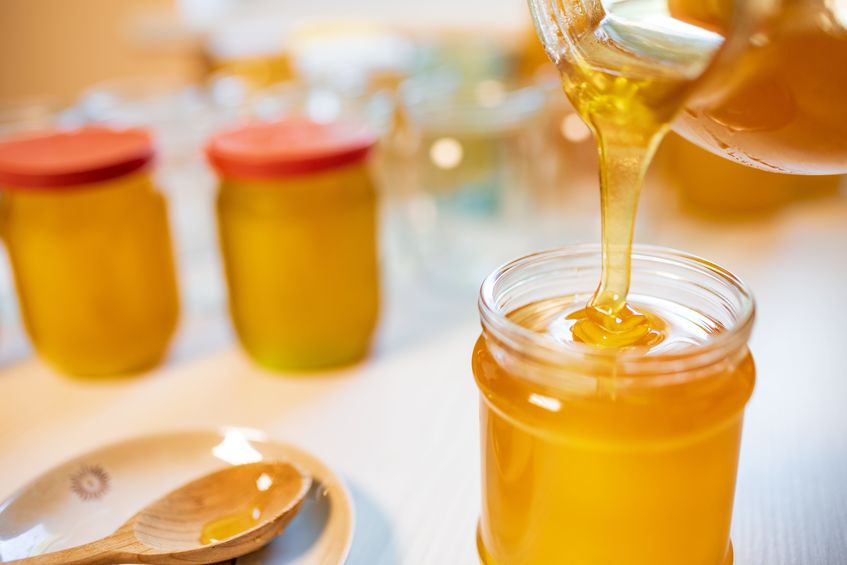
Pure and adulterated honey may look nearly identical in a jar, but that does not mean they provide the same product.
Honey contains more than naturally occurring sugars. It also contains compounds that contribute to its characteristics and beneficial properties. When authentic honey is diluted or replaced with undeclared sweeteners, the composition of the finished product can change.
For companies developing private label honey products, understanding that difference is important. The product may be sourced and packaged by another company, but your brand name is ultimately on the label.
What Makes Pure Honey Different?
Pure honey is honey that has not been mixed with undeclared sweeteners or other ingredients.
Honey consists primarily of naturally occurring fructose and glucose, along with water and smaller amounts of enzymes, organic acids, minerals, phenolic compounds, and other constituents.
Its exact composition varies naturally. Floral source, geography, season, and other factors contribute to differences among honey varieties, including their color, aroma, and flavor.
These characteristics can become part of the product story for a private label brand, especially when customers are looking for authentic honey with recognizable natural qualities.
What Happens When Honey Is Adulterated?
Honey adulteration can occur when honey is diluted or mixed with undeclared lower-cost sweeteners, such as certain sugar syrups. Honey fraud can also involve misrepresentation of origin or other product characteristics.
Adding another sweetener does more than reduce the amount of authentic honey in the jar. It changes the composition of the product.
That difference may not be obvious by looking at the finished honey. Adulterated honey can still resemble authentic honey in color, consistency, and sweetness, which is why appearance alone cannot establish purity.
Adulteration Can Change Honey’s Beneficial Properties
The difference between pure and adulterated honey goes beyond sweetness.
Honey naturally contains phenolic compounds and other constituents associated with its antioxidant activity. Research examining honey adulterated with sugar syrups found that increasing levels of syrup reduced antioxidant and enzymatic activity. At higher adulteration levels, researchers also observed reductions in total phenolic content.
This does not mean every honey provides identical properties. Honey’s natural composition varies based on its source and other factors. However, replacing a portion of authentic honey with undeclared syrup can dilute or alter components that would otherwise be present.
For private label brands, that matters when customers choose honey because of the natural qualities they associate with an authentic product.
Why Purity Matters for Private Label Brands
Private label companies may rely on suppliers for sourcing, quality control, and packaging, but customers see the brand printed on the jar.
If a product represented as pure honey contains undeclared sweeteners, the issue can affect ingredient integrity, customer confidence, and brand reputation.
This makes supplier qualification especially important. Brands should understand how honey authenticity is evaluated and what systems are in place to support the product they are selling.
Honey certifications and quality controls can provide useful information when evaluating a supplier. Analytical testing, supplier documentation, and established specifications and certifications can all contribute to greater confidence in the finished product.
Traceability Adds Another Layer of Confidence
Testing is important, but protecting honey integrity begins before the finished product reaches the packaging line.
Traceability provides information about where honey originated and how it moved through the supply chain. True Source Certified honey adds independent verification focused on honey authenticity, traceability, and responsible sourcing.
For private label brands, that visibility is valuable because much of the sourcing process happens behind the scenes.
A strong supplier should be able to explain where its honey comes from, how authenticity is evaluated, what quality controls are used, and which certifications can be supported.
Put Your Brand Behind Honey You Can Trust
Pure and adulterated honey may not always look different on the shelf. The difference is found in what is actually inside the product and the sourcing, testing, documentation, and quality systems behind it.
Honey Source works with commercial customers to provide honey backed by sourcing expertise, quality controls, traceability, and a range of specifications and certifications. If you’re evaluating honey for a private label product, request a quote to discuss your product and sourcing requirements.


Leave a Reply