
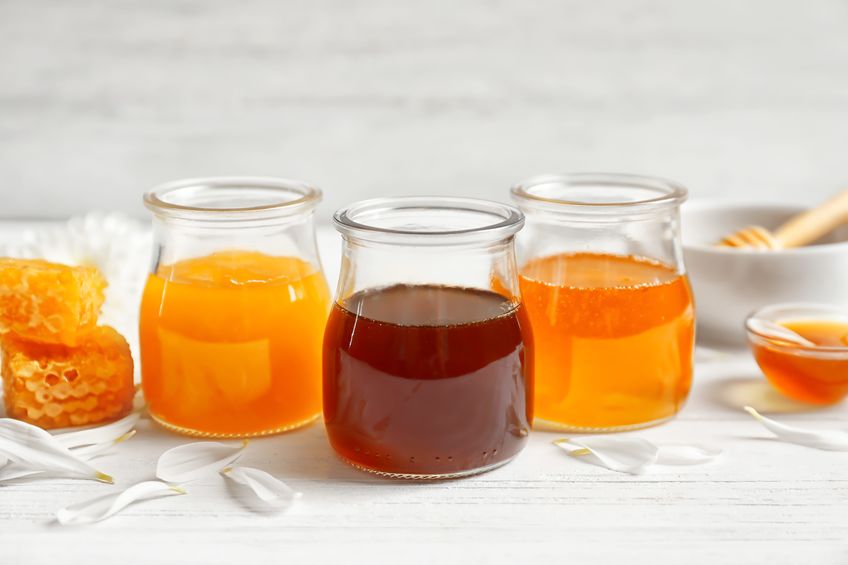
A small change in honey color may not seem significant until it changes the appearance of a finished product. For food manufacturers, color is more than a visual characteristic. It can be part of an ingredient specification that helps maintain consistency across production runs.
Because honey naturally varies, manufacturers need to understand what drives those differences and how their supplier manages them.
Honey Color Naturally Varies
Honey does not come in one standard shade.
Floral source, geography, season, and other natural factors can influence its appearance. Honey can range from nearly colorless to deep amber, and those differences may accompany variations in flavor and other characteristics.
Understanding the differences between light and dark honey provides useful context, but commercial manufacturers often need to go further. The question is not simply whether a honey is light or dark. It is whether its color falls within the specifications established for a particular formulation.
The USDA classifies extracted honey into recognized color designations ranging from Water White through Dark Amber. These classifications provide the industry with a standardized way to describe honey color.
Manufacturers can review the USDA’s official Extracted Honey Grades and Standards for additional information about these classifications.
Color Can Affect the Finished Product
When honey is used commercially, its color becomes part of the formulation.
A lighter honey may be selected for an application where manufacturers want honey functionality without significantly darkening the finished product. A darker honey may be appropriate when a deeper color or more pronounced honey character complements the product.
That means an unexpected shift in color between honey lots can also show up in the finished product. Depending on the amount of honey used and the application, those variations may affect the appearance consumers expect from the product.
For food and beverage manufacturers, that consistency matters because procurement and R&D teams need an ingredient that meets established expectations from one production cycle to the next.
Color Specifications Create a Common Standard
“Light” and “dark” are useful descriptions, but commercial buyers often need something more precise.
The USDA color system includes Water White, Extra White, White, Extra Light Amber, Light Amber, Amber, and Dark Amber classifications. The corresponding Pfund scale assigns numerical ranges to these color classifications, giving manufacturers and suppliers a standardized way to measure and communicate honey color.
Defined specifications give suppliers, procurement teams, QA professionals, and R&D teams a common reference point. Instead of relying on subjective visual comparisons, manufacturers can establish acceptable parameters for the honey entering their operation.
Those parameters also make supplier conversations more productive. If color is important to the formulation, it should be discussed during ingredient qualification rather than after a production inconsistency appears.
Consistency Requires More Than Matching Color
Color matters, but it should never be evaluated in isolation.
Two honeys that appear similar are not necessarily identical in floral source, flavor, moisture, authenticity, or other characteristics. Manufacturers should evaluate color alongside the other specifications that matter to the application.
This is particularly important when qualifying a new supplier. Honey certifications and quality standards can provide additional information about sourcing, authenticity, food safety, and other ingredient requirements.
Quality teams should also consider documentation, testing, traceability, and the supplier’s ability to manage natural variation. Color consistency is one piece of a larger ingredient-quality program.
Reliable Supply Supports Repeatable Production
Commercial manufacturers do not need honey to be identical in every natural characteristic. They need a supplier capable of managing natural variation within the specifications required for production.
That starts with selecting the appropriate honey and continues through sourcing, blending, quality control, and supplier management. Honey Source works with food manufacturers to provide commercial honey that supports consistent production requirements.
When evaluating a supplier, ask how color is measured, what range can be specified, how lot-to-lot variation is managed, and what happens when an ingredient falls outside agreed-upon parameters.
Make Color Part of the Sourcing Conversation
Honey color can influence ingredient selection, formulation, and finished-product consistency. For manufacturers, defining acceptable color specifications early can help procurement, QA, and R&D teams work toward the same production expectations.
Color should also be considered alongside flavor, moisture, floral source, authenticity, certifications, and other requirements specific to the application.
Explore bulk honey options and request pricing to discuss the color, specifications, volume, and sourcing requirements for your commercial application.




Leave a Reply